
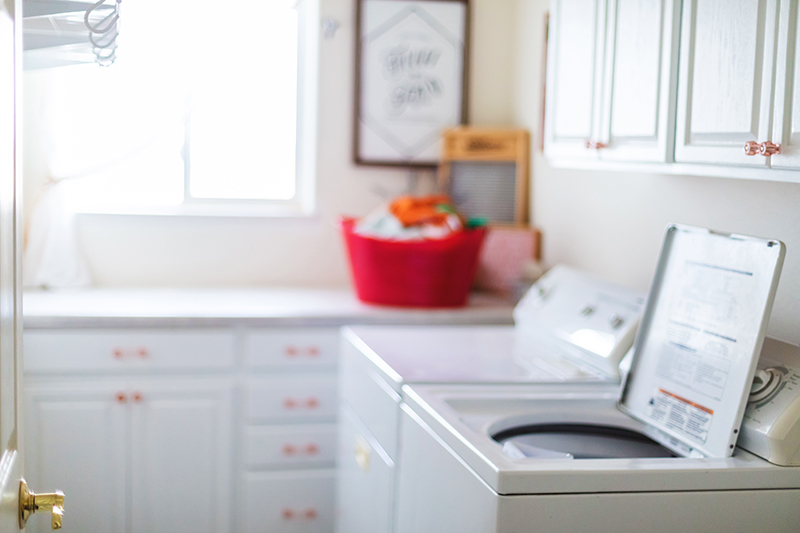
“Laundry Day” is a dangerous concept for anyone living with a septic system. If you save all your washing for Sunday and run five or six loads back-to-back, you are essentially hitting your septic tank with a “flash flood” of water. In the industry, we call this hydraulic overloading, and it is one of the fastest ways to kill a drain field.
The Rule of One
For the average Northern Virginia household, the safest habit is to limit yourself to one load of laundry per day. If you have a large family and that isn’t possible, you must at least space the loads out by 4 to 6 hours. Your septic tank needs “settling time.” When a massive volume of water enters the tank quickly, it stirs up the solids at the bottom. Instead of those solids staying in the tank, they get pushed out into your drain field pipes, where they cause permanent clogs.
The Hidden Danger of Lint and Detergent
It isn’t just the water volume; it’s what is in it. Modern synthetic clothing sheds micro-fibers (lint) that do not break down in a septic tank. Additionally, using too much detergent—or using high-suds powders—can interfere with the bacterial balance in your tank.
- Pro Tip: Use liquid detergents (they dissolve better) and consider installing a specialized lint filter on your washing machine’s discharge hose to catch those fibers before they reach your tank.
Protecting Your System’s Capacity
If you notice your toilets gurgling or your drains slowing down only on days when you do laundry, your system is telling you it’s overwhelmed. Spacing out your water usage is a free way to add years to your system’s life.
If you’re worried that years of “Laundry Sundays” have already taken a toll on your drain field, Great Falls Septic Service can perform a septic maintenance check to ensure your lines are clear and your tank is processing water at the right speed.


 Skip to content