
When budgeting for a new home or a major renovation in Northern Virginia, the square footage of your house is a helpful starting point, but it isn’t the number that truly determines your septic costs. In the eyes of the Virginia Department of Health and local installers, a 2,000 sq. ft. house is evaluated primarily by its bedroom count and the quality of the soil on the lot.
In Virginia, septic systems are sized by “bedroom count” because the state uses this to estimate the maximum daily water flow. A 4-bedroom system assumes an occupancy of eight people, which significantly impacts the size and design of your underground infrastructure. Whether you are building from scratch or planning an addition that brings your count to four, the requirements—and the costs—shift significantly.
Sizing the System: Tank and Field Requirements
For a typical 2,000 sq. ft. home, you are likely looking at a 3-bedroom or potentially a 4-bedroom layout. This footprint requires a system capable of handling a specific “daily design flow.”
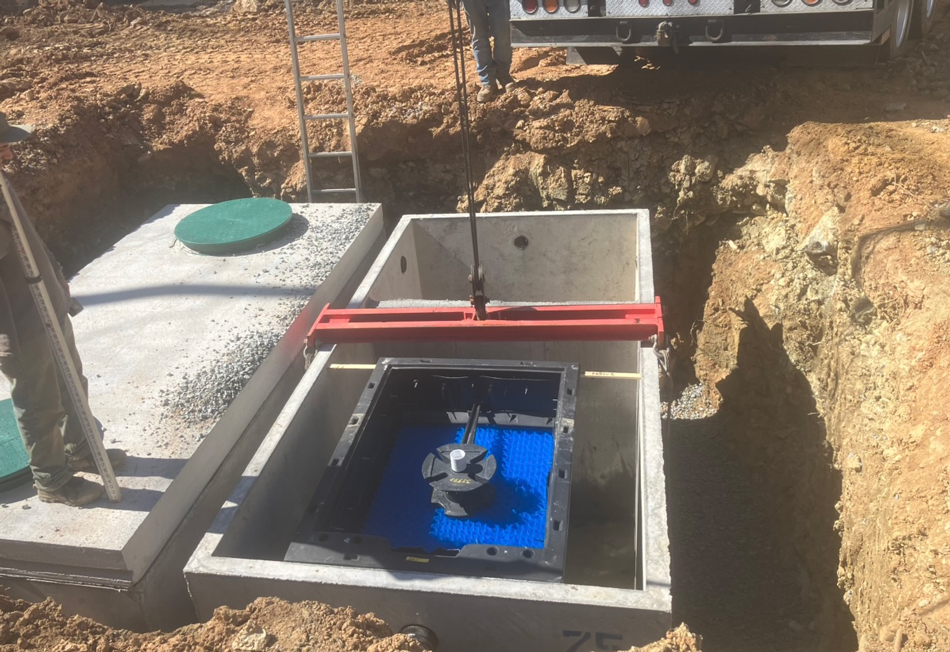
- The 3-Bedroom Standard: Under Virginia regulations, a 3-bedroom home (regardless of square footage) typically requires a 1,000-gallon septic tank.
- The 4-Bedroom Upgrade: Once you move to a 4-bedroom home, Virginia Department of Health regulations typically mandate a 1,200 to 1,250-gallon tank.
While the price difference for the larger tank is relatively small (often just a few hundred dollars), the real cost increase comes from the size of the drain field. A 4-bedroom drain field must be roughly 20–25% larger than a 3-bedroom system to ensure the soil can safely absorb and treat the increased volume of wastewater.
2026 Estimated Cost Breakdown in Northern Virginia
The total installation cost for a home of this size in Fairfax or Loudoun County generally falls into two categories based on your land’s “perc” (percolation) rate:
- Conventional Gravity Systems ($8,000 – $18,000): If you are lucky enough to have “good dirt” that drains well, a conventional system is the most cost-effective. This includes the concrete tank, a distribution box, and gravel trenches.
- Alternative/Engineered Systems ($25,000 – $50,000+): Because much of Great Falls and McLean sits on heavy clay or rocky terrain, many 2,000 sq. ft. and 4-bedroom homes require an alternative septic system. These systems use advanced technology like peat filters, drip irrigation, or aerobic treatment units to purify the water before it reaches the soil. In extreme cases with difficult terrain, these projects can exceed $60,000.
The Impact of Site Conditions and Regulations
Beyond the house size, your specific lot dictates the final invoice. If your property has a steep slope, we may need to install a pump to move effluent uphill. If the soil is particularly dense, we might need a mound system using specialized sand-fill.
Before you can break ground, you must obtain a septic permit from the local Health Department. This process involves a soil evaluation by a licensed professional to determine if your lot can handle the “hydraulic load” of your proposed bedroom count. If your lot is small or has setbacks, you might be forced into a more expensive, compact alternative system to remain compliant.
Designing for the Future of Your Home
Your septic system is the most critical utility for any home off the municipal grid. While the upfront investment for a 4-bedroom or engineered system can be high, it is designed to protect your property and the environment from the failures that plague older, poorly-sited systems. Oversizing your system slightly during a new build can actually save you a fortune in future expansion costs or soil remediation.
If you are planning a renovation or a new build for a 2,000 sq. ft. home, contact Great Falls Septic Service. Our team can provide a detailed septic tank installation quote based on your specific floor plan and the unique soil conditions of your Northern Virginia property.


 Skip to content